- Location: 16-1-1601 Aobeigongyuan, Chang 'an District, Shijiazhuang City, Hebei Province, China
- Phone: +86-18134111662
- Email: [email protected]
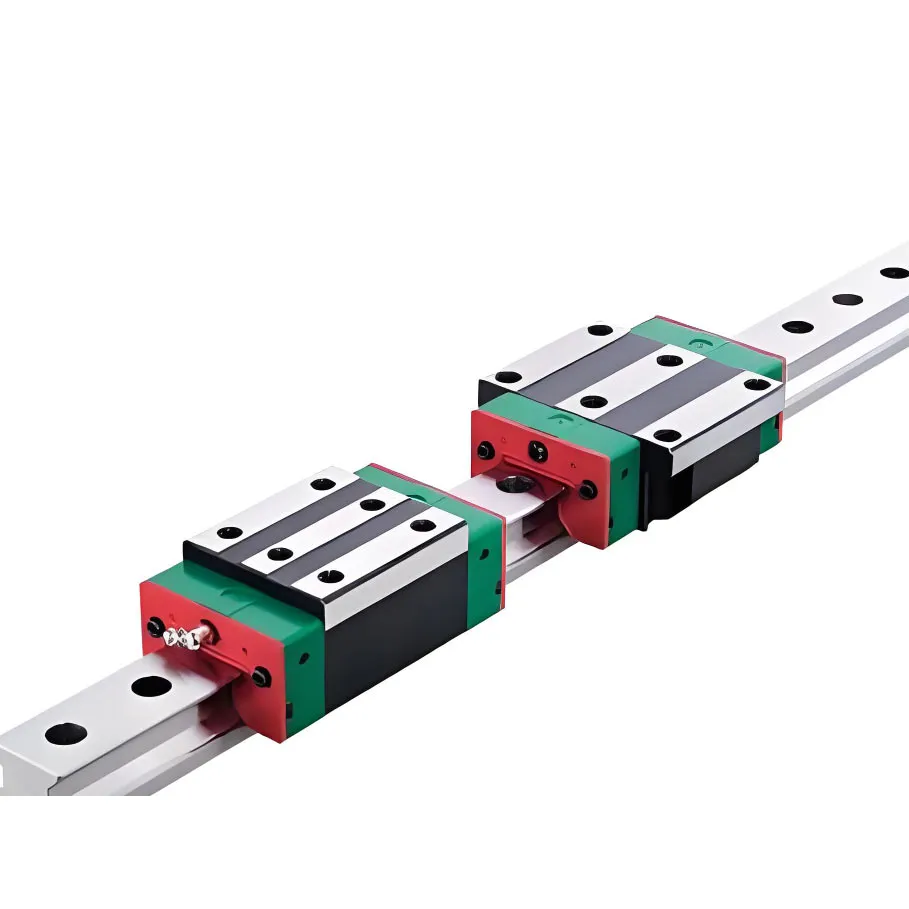
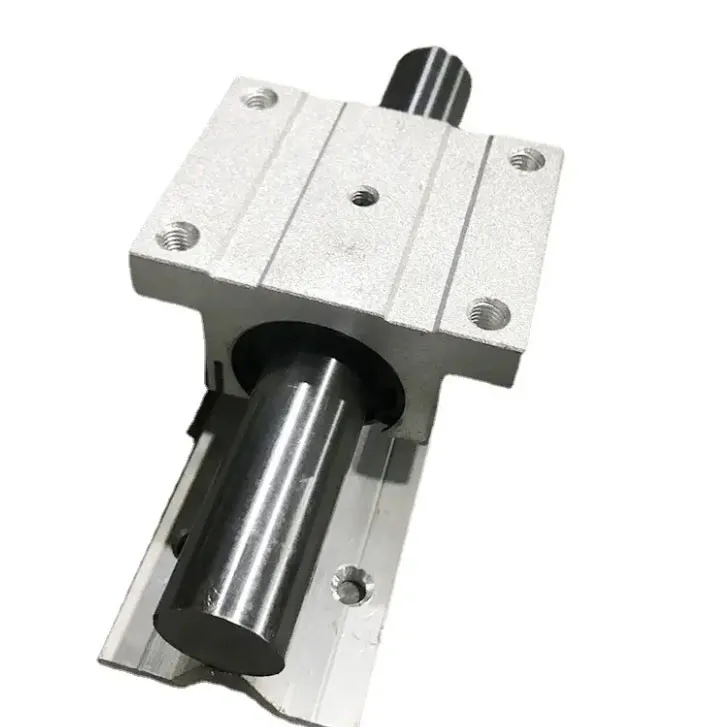
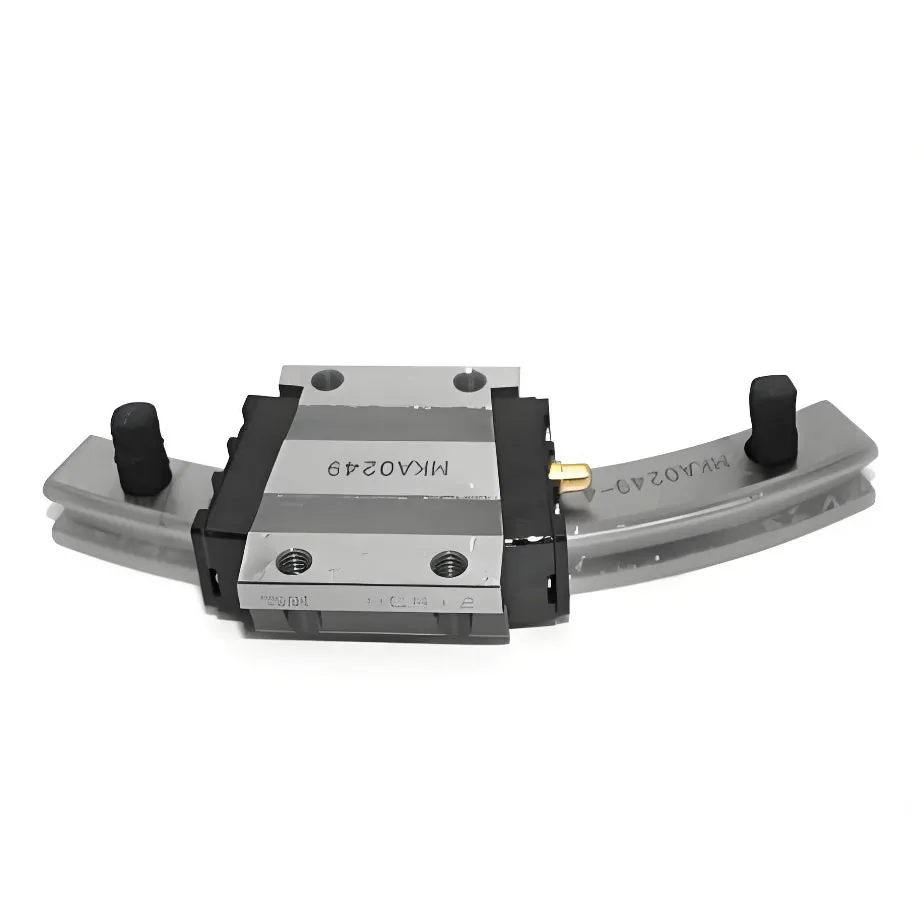
Heavy Duty Linear Bearing Slide Rails Rgh65
-
Linear Guide Classification
1. Classification by rolling-element type
Type
Characteristics
Ball-type linear guide
Low frictional resistance and high motion accuracy
Roller-type linear guide
High rigidity and high load capacity
2. Classification by structural shape
Type
Characteristics
Rectangular guide rail
Simple structure, easy to process, and a wide load-bearing surface
Arc guide rail
High load capacity and stability, flexible installation, and straightforward maintenance
Cylindrical guide rail
Simple to manufacture, with high precision requirements
3. Classification by performance
Type
Characteristics
High-precision linear guide
Uses grinding-grade processing technology
Heavy-load linear guide
Made using Cr/Mo alloy steel
High-speed, quiet linear guide
Low friction and quiet operation
Micro linear guide
Extremely compact design
Product Grades
Grade
Running parallelism (100 mm guide rail)
Suitable applications
Common (C)
≤5μm
Basic automation equipment and standard packaging machinery
Advanced (H)
≤3μm
Non-critical axes of precision machine tools and conventional printing equipment
Precision grade (P)
≤2μm
Critical axes of CNC machine tools and high-precision measuring instruments
Ultra-precision grade (UP)
≤1.5μm
Semiconductor wafer manufacturing and optical focusing equipment
-
Linear Guide Features
1. High-precision control
Precision machining processes, including grinding and quenching, combined with ball or roller circulation designs, support micrometer-level repeat positioning accuracy. Optimized rolling elements help eliminate motion lag and promote smooth operation.
2. Low friction and high efficiency
Rolling friction reduces energy consumption by more than 60% compared with sliding friction and supports high-speed movement.
3. High-rigidity load capacity
A four-row ball or roller layout and preload adjustment technology support combined radial, axial, and moment loads. Static load capacity can reach hundreds of kilonewtons. Heavy-duty designs also increase the roller-guide contact area by three times, making them suitable for high-impact applications such as stamping equipment.
4. Long service life and reliability
Hardened steel guide rails with multilayer sealing provide strong wear resistance and a service life measured in tens of thousands of hours.
Resistance to environmental exposure is supported by dustproof and waterproof construction and materials designed to withstand high and low temperatures. These features suit demanding settings such as semiconductor workshops and food machinery.
5. Modularity and adaptability
Standardized dimensions and mounting-hole layouts support compatibility with mainstream brand interfaces, quick replacement, and system expansion.
Compact design: Micro rail sliders suit space-constrained applications such as 3C electronics and medical equipment.
-
Linear Guide Performance Advantages
Advantage
Technical basis
Precise positioning
Micron-level repeatability and automatic centering capability; the arc-groove design accommodates installation deviation
Efficient load capacity
Four-row ball or roller load distribution combined with a reinforced, impact-resistant end-cap structure
Dynamic adaptability
Can be matched accurately to operating requirements
Environmental compatibility
Multilayer sealing and a self-lubricating or maintenance-free design help reduce interference from dust and oil contamination
-
Linear Guide Selection
Accuracy grade: C3/C5/C7 accuracy grades correspond to different positioning requirements;
Load type: Match static load (kN), dynamic load (kN), and moment (N · m) to the equipment’s load characteristics;
Environmental suitability: Consider temperature range, protection level, and lubrication method (grease or oil lubrication).
-
Linear Guide Applications
Machining centers
NC lathes
Grinding machines
Precision machining machines
Heavy-cutting machines
Automation equipment
Transport equipment
Measuring equipment
Equipment requiring high positional accuracy
-
Designing High-Precision Arc Motion Systems with HCR Curved Linear Rails and Customized Bearings
In modern industrial applications, precise and flexible motion systems are essential for efficiency, accuracy, and reliability. HCR Curved Linear Rail Systems, including models HCR45A+60/1000R and HCR45A+60/1200R, provide a solution for high-precision arc motion in CNC machines, robotic systems, and automated production lines. Their robust construction, configurable radii, and smooth-running bearing systems help engineers develop motion systems suited to complex operating requirements.
1. Why Arc Motion Matters in Industrial Systems
Conventional linear guides support straight-line movement, which can restrict machine layout options. Curved linear rails allow components to travel along circular or arc-shaped paths, supporting compact machine designs, more efficient use of space, and improved workflows in automated production lines. CNC routers, robotic arms, and inspection systems can use the smooth, precise arc motion of HCR curved guides to carry out intricate operations with consistent accuracy.
2. Precision Engineering of HCR Curved Linear Rails
The precision of HCR45A+60/1000R and HCR45A+60/1200R is supported by several design features:
Hardened steel rails and bearing blocks: Help resist wear and maintain smooth movement over extended operating periods.
Recirculating ball bearings: Provide low-friction, repeatable motion while helping reduce vibration and backlash.
Configurable radius: Different radius options let engineers select a curve to suit a particular machine layout, while maintaining accuracy across tight and extended arcs.
These characteristics make HCR curved linear rails suitable for high-precision applications where accurate movement is important throughout the travel path.
3. CNC Machine Applications
CNC machines may need tools to follow curved or circular paths for contouring, engraving, or milling. HCR curved linear guides allow engineers to design machines that maintain consistent feed rates along complex trajectories. The smooth movement of HCR45A curved rails helps minimize vibration, support surface-finish quality, and improve dimensional accuracy. HCR45A+60/1000R suits smaller machines requiring tighter arcs, while HCR45A+60/1200R supports larger machines with extended curved travel, maintaining stability and precision under heavier loads.
4. Robotics Applications
Robotic systems can use HCR curved linear guides for pick-and-place, assembly, and material-handling operations. The guides let robotic components move along precise arcs without requiring additional rotary joints. Benefits include:
High-speed, smooth movement to support efficient operation.
Accurate repeatability for repetitive tasks.
Compact design, helping make effective use of workspace.
Smaller robots may use HCR45A+60/1000R for precision tasks, while industrial robots with larger payloads and longer travel distances can use HCR45A+60/1200R.
5. Integration and Maintenance
Flanged mounting and pre-engineered radius specifications help simplify integration of HCR curved linear rails into machine frames. Stainless steel construction and sealed bearing blocks help reduce contamination risks, while routine lubrication supports long-term performance. Proper integration helps machinery operate efficiently and retain precision throughout its service life.
6. Benefits Compared with Traditional Systems
Compared with straight linear rails or complex rotary mechanisms, HCR curved guides can provide:
A simpler machine design with fewer mechanical components.
Accurate arc movement with minimal backlash.
Smooth, low-friction operation under high-speed and high-load conditions.
Lower maintenance requirements and an extended service life.
These benefits make HCR curved rails an option for engineers designing high-precision arc motion systems for modern industrial environments.
Conclusion
HCR Curved Linear Rail Systems, including HCR45A+60/1000R and HCR45A+60/1200R, provide durable, smooth, high-precision arc motion for CNC machines, robotics, and automated production lines. With configurable radii, robust construction, and advanced bearing systems, these rails help engineers develop efficient and reliable motion systems for modern industrial requirements.
-
Supporting Industrial Automation with HCR Curved Linear Guide Systems: Smooth Arc Motion for CNC and Robotics
Industrial automation increasingly depends on equipment capable of precise movement along curved paths. HCR Curved Linear Guide Systems, including HCR45A+60/1000R and HCR45A+60/1200R, provide a solution for smooth arc motion in CNC machines, robotic systems, and automated production environments. Configurable radii, precision bearings, and robust rails support productivity, efficiency, and accuracy in demanding industrial applications.
1. The Role of Curved Linear Guides in Automation
Curved movement can help automation systems use more compact layouts, simplify mechanical design, and improve operational flexibility. Straight-line guides may need additional rotary joints to create circular movement, adding components and potential failure points. HCR curved linear guides instead let components travel directly along smooth arcs, reducing mechanical complexity while maintaining precision.
2. HCR Curved Linear Guide Features
The HCR45A+60/1000R and HCR45A+60/1200R systems offer several key features:
Precision-ground rails and bearing blocks: Support consistent, smooth movement along curved paths.
Recirculating ball bearings: Provide low-friction, repeatable movement for high-speed applications.
Configurable radius: Enables engineers to choose an arc radius for each machine and achieve accurate movement along complex paths.
Durable construction: Stainless steel rails and sealed bearings help limit wear and maintenance requirements.
Together, these features support precise movement in applications requiring continuous or repetitive travel along arcs.
3. CNC Applications
CNC tools often follow curved or circular paths during cutting, milling, and engraving. HCR curved linear rails provide smooth, repeatable tool-head movement, helping improve machining accuracy, reduce vibration, and achieve high-quality surface finishes. The 1000R radius is suitable for compact machines, while the 1200R radius accommodates larger CNC machines requiring longer arc travel.
4. Robotics Applications
Robotic arms and automated handling systems need precise arc motion for pick-and-place, assembly, and inspection tasks. HCR curved linear guides support:
High-speed movement with minimal vibration.
Accurate positioning and repeatability for recurring tasks.
Compact layouts that make efficient use of available workspace.
Smaller robots can benefit from HCR45A+60/1000R, while larger industrial robots can use HCR45A+60/1200R for heavier payloads and extended motion paths.
5. Integration into Automated Systems
HCR curved linear rails are designed to integrate into automation systems. Pre-engineered radii simplify machine design, and flanged mounting options provide secure frame attachment. Sealed bearing blocks help limit contamination, while routine lubrication supports long-term performance. Integrating these rails can reduce mechanical complexity, support reliability, and improve the precision of automated systems.
6. Benefits Compared with Conventional Motion Systems
Compared with traditional linear guides or rotary mechanisms, HCR curved guides offer:
Simplified design with fewer moving parts.
Smooth, low-friction movement along arcs.
Reduced maintenance needs and an extended service life.
High precision and repeatability, including in high-speed applications.
These benefits make HCR curved linear systems a practical option for engineers seeking efficient, reliable arc-motion solutions.
7. Supporting Productivity and Efficiency
Using HCR curved linear guides in CNC and robotic systems can help manufacturers:
Reduce cycle times through smoother movement.
Increase production throughput.
Maintain machining and assembly accuracy.
Reduce downtime and maintenance costs.
Configurable arc radii and advanced bearing technology help industrial equipment operate efficiently.
Conclusion
HCR Curved Linear Guide Systems, including HCR45A+60/1000R and HCR45A+60/1200R, provide smooth, precise, durable arc motion for CNC machines, robotics, and automated production lines. Configurable radii, advanced bearing systems, and robust construction help engineers create high-performance, efficient automation systems for modern industrial requirements.
-
What is the average lead time?
Request a Quote
Interested in our products? Leave your details here, and our team will contact you shortly.
1. Classification by rolling-element type TypeCharacteristicsBall-type linear guideLow frictional resistance and high motion accuracyRoller-type linear guideHigh rigidity and high load capacity 2.