- Location: 16-1-1601 Aobeigongyuan, Chang 'an District, Shijiazhuang City, Hebei Province, China
- Phone: +86-18134111662
- Email: [email protected]
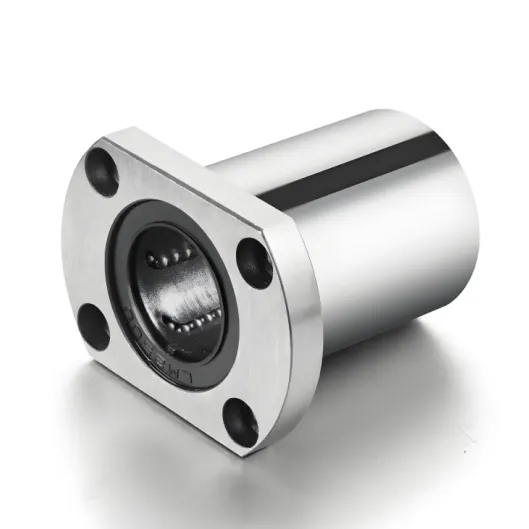
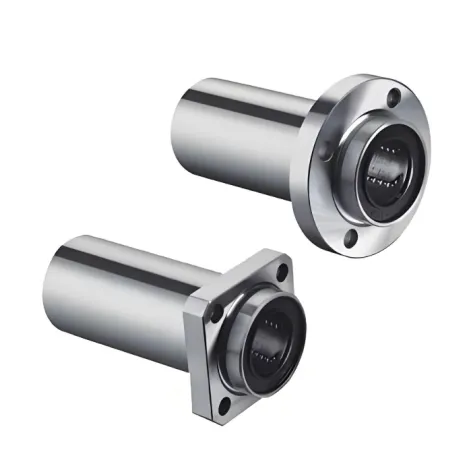
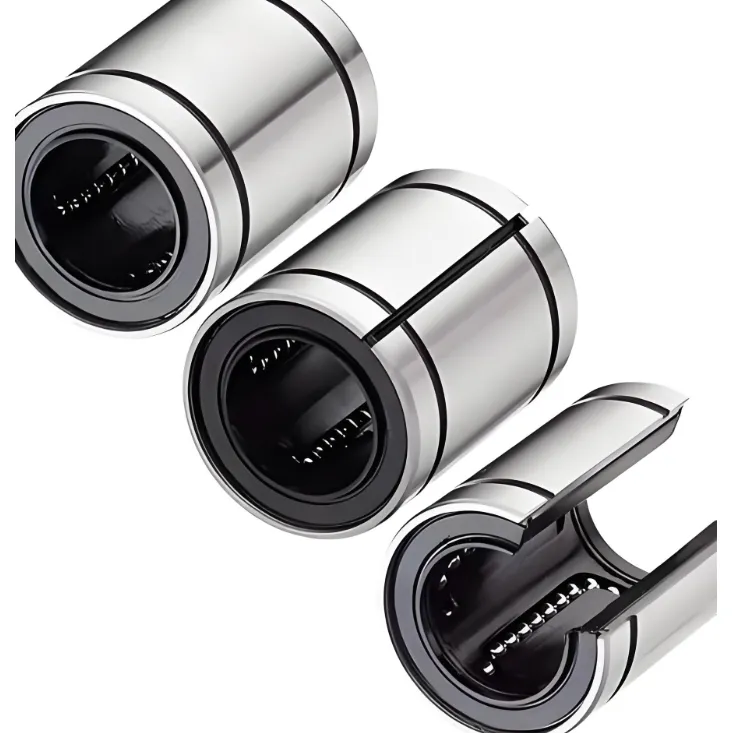
High Quality Precision Bearings Customized Lm Bearing Types
-
Linear Bearing Features and Operating Benefits
1. Low friction coefficient
Metal linear bearings achieve low-resistance motion through rolling friction. The bearing balls make point contact with the shaft, supporting low friction and high precision. This rolling contact is useful in linear motion arrangements where smooth movement and accurate positioning are important. For equipment designers, the combination can help support repeatable travel while limiting resistance during operation.
2. High load capacity
Plastic linear bearings use a sliding-friction method and contact the shaft surface. The source describes them as offering greater load capacity, low noise, and self-lubricating characteristics, making them suitable for medium- and low-speed working conditions. These qualities can be valuable in applications where quiet travel and reduced need for added lubrication are priorities. Selection should reflect the movement, load, and operating conditions of the intended equipment.
3. High-speed stability
The motion accuracy is not affected by speed, making these bearings suitable for applications such as precision machine tools and textile machinery that require high motion accuracy. Stable linear movement can support controlled operation in equipment that repeatedly moves components along a shaft. The appropriate bearing style depends on the application, since metal and plastic linear bearings have different friction approaches and stated operating characteristics.
4. Convenient installation
The standardized design provides strong interchangeability between bearings and shaft seats, helping simplify installation and replacement. Standardization can also make it easier to plan bearing integration into equipment assemblies and maintain consistency across a design. Linear bearings are used in electronic devices, food packaging machinery, and other industries, where straightforward installation can contribute to practical equipment assembly and servicing.
5. Choosing an applicable type
Metal bearings are described as suitable for medium- and low-speed precision motion. Plastic bearings are described as more suitable for medium- to high-speed and high-load conditions, with low-noise and self-lubricating characteristics. These application descriptions provide a starting point for choosing a bearing type. Review the actual operating environment, shaft arrangement, movement requirements, and equipment design before selecting a specific model.
The product range title references LM4UU, LMH8UU, LMF10, and LMK16UU linear bearing types, including flange bearing options and stainless steel ball bearings. These model identifiers help buyers discuss the requested configuration. Confirm the required type and compatibility with the intended shaft and assembly when requesting product information. No additional dimensions or performance ratings are specified here.
-
Linear Bearing Applications
Linear bearings are increasingly used in equipment that relies on guided linear movement. Their role is to support movement along a shaft, and the choice between metal and plastic bearing types can be considered alongside speed, load, noise, and motion-accuracy needs. A suitable bearing helps the moving part travel in a controlled way as part of the larger machine or device.
Application industries include electronic equipment, food machinery, packaging machinery, medical machinery, printing machinery, textile machinery, robots, tool machinery, CNC machine tools, automobiles, and digital 3D coordinate measuring equipment. These varied settings have different operating demands, so assess the intended duty and assembly before specifying a bearing. The listed uses describe the breadth of applications and do not imply that every model is suitable for every machine.
In electronic equipment and packaging lines, linear bearing arrangements can support guided component movement within a machine. In printing and textile machinery, accurate linear travel can be relevant to repeatable motion. Machine tools, robots, and coordinate measuring equipment can also use linear bearings as part of their movement systems. The final bearing choice should match the requirements of the particular design rather than relying on the industry name alone.
For food and medical machinery, buyers may consider the bearing style in relation to the equipment layout, movement pattern, and maintenance approach. For automotive, tool machinery, or CNC applications, confirm that the selected type fits the intended shaft and assembly. These practical checks help connect the bearing's stated characteristics to real operating conditions without assuming specifications that are not provided.
When comparing models, identify whether the application calls for a metal or plastic linear bearing and whether a flange arrangement is required. Share the model reference, such as LM4UU, LMH8UU, LMF10, or LMK16UU, when discussing a requirement. Confirm the exact configuration and application fit before ordering, particularly where equipment design depends on interchangeability with an existing bearing and shaft seat.
-
Product Details and Model Selection
The product images below provide a visual reference for the linear bearing range. The product title identifies customized LM bearing types, including LM4UU, flange bearing LMH8UU, LMF10, and LMK16UU, and refers to stainless steel ball bearings. Use the model names shown in the product title when identifying the bearing type you are interested in.
Image references are provided for product review; they do not replace confirmation of the required model or configuration. Before choosing a bearing, consider how it will fit into the equipment assembly and what kind of guided movement the application requires. Buyers can also specify whether they are evaluating metal or plastic linear bearing characteristics, since the described friction methods and operating benefits differ.
Selection and maintenance value depend on understanding the equipment's actual movement and installation requirements. A standardized bearing and shaft-seat design can support interchangeability, but compatibility should still be checked for the chosen application. Keep the bearing and surrounding shaft arrangement suitable for the intended operating conditions, and follow the equipment's established inspection and maintenance practices.
For a product inquiry, provide the model reference and describe the application, the bearing type under consideration, and any relevant installation requirements. This gives the supplier a clear basis for discussing the requested linear bearing. Technical parameters not shown on this page should be confirmed directly rather than assumed from a model name or product photograph.
-
Lead Time and Quote Requests
Request a Quote
If you are interested in our products, you can choose to leave your information here, and we will be in touch with you shortly.
Lead time information is not specified on this page. Contact the supplier with your selected model and order requirements to ask about the applicable lead time and quotation. For a clearer product discussion, include whether you are interested in LM4UU, LMH8UU, LMF10, LMK16UU, a flange bearing option, or stainless steel ball bearings, as well as the intended equipment application.
When submitting an inquiry, it can also be helpful to explain the type of movement and working conditions involved, such as whether low friction, high motion accuracy, low noise, or a stated load characteristic is a priority. These details support a more relevant product conversation. Confirm all required technical specifications, compatibility, availability, and delivery information with the supplier before placing an order.


1. Low friction coefficient Metal linear bearings achieve low-resistance motion through rolling friction. The bearing balls make point contact with the shaft, supporting low friction and high