- Location: 16-1-1601 Aobeigongyuan, Chang 'an District, Shijiazhuang City, Hebei Province, China
- Phone: +86-18134111662
- Email: [email protected]
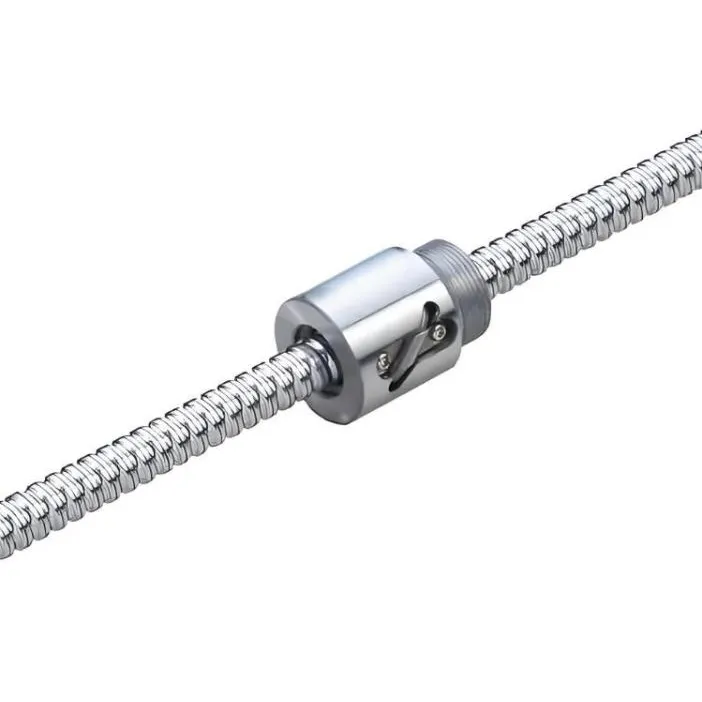
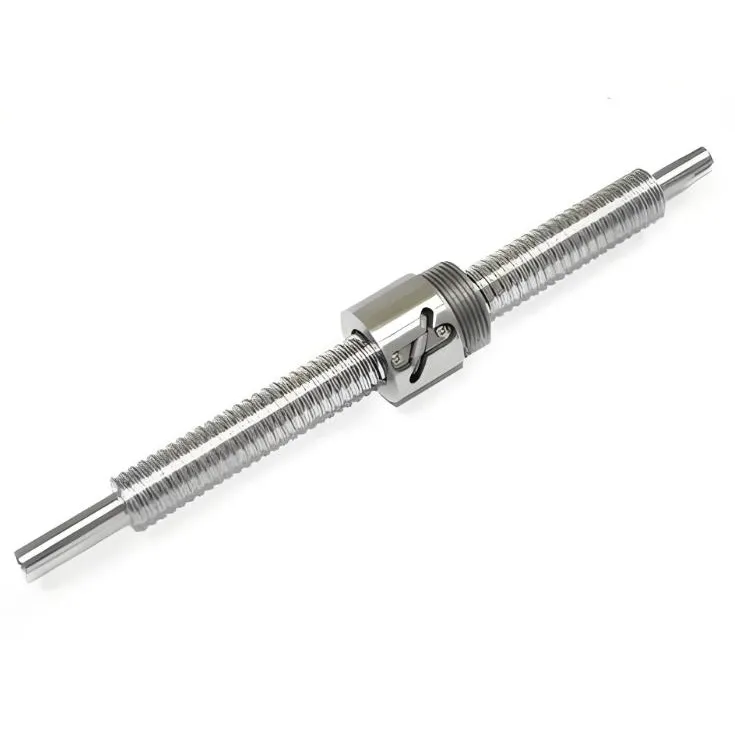

Bsh Ball Screw Balls Without Flange Bsh1605 Bsh120
-
Product Features
High-precision transmission
With a double-nut structure and high-precision grinding process, repeat positioning accuracy can reach ± 0.003mm. This makes the ball screw suitable for precision applications such as CNC machine tools and semiconductor equipment.
Efficient, energy-saving operation
Transmission efficiency exceeds 90%, with low friction resistance for high-speed motion applications.
High-rigidity design
Preloading eliminates axial clearance, while the dynamic and static rated loads are high.
Versatile configuration
Right-hand or left-hand threads and multiple customized leads are available. The screw can be configured for flange mounting or direct fixation.
-
Product Applications
CNC machine tools: tool feed drive
Industrial robots: welding robots
Medical equipment: CT scanners, examination-bed lifting mechanisms, and surgical robot operating arms
Semiconductor equipment: positioning the wafer stage of a lithography machine
-
Product Details
-
Product Parameters

-
BSH Ball Screw Customization Options for Diverse Industrial Motion Requirements
In modern industrial automation and precision machinery, standard components may not meet every application’s specific requirements. BSH ball screws, including BSH1605 and BSH1204, offer a range of customization options that enable engineers and designers to configure linear motion systems for their performance, efficiency, and reliability needs. These options are particularly useful in CNC machines, robotics, medical equipment, and automated production lines, where precision, speed, and durability are essential.
Thread Lead and Diameter Options
Thread lead and shaft diameter are key customization parameters. The lead determines the axial travel per screw revolution, affecting both speed and resolution. Adjusting the lead allows users to balance linear velocity and positioning accuracy to suit the machine’s requirements. The BSH series can be customized with different diameter and lead combinations, making it suitable for light-load precision equipment as well as heavy-duty industrial applications.Accuracy Grade Selection: C3, C5, and C7
BSH ball screws are available in several accuracy grades—C3, C5, and C7—to accommodate different precision requirements.C3: High accuracy for micrometer-level applications, including CNC machining centers and semiconductor equipment.
C5: Mid-level accuracy for general automation systems and medium-load CNC machines.
C7: Standard accuracy for cost-effective linear motion solutions in industrial automation and feeder systems.
Selecting a suitable grade for each application supports the required performance while helping manage cost.Flange and Mounting Options
While some BSH ball screws are supplied without a flange, customization can include flange design, mounting type, and shaft length adjustments. Engineers can specify threaded ends, through-holes, or other mounting configurations to integrate the ball screw into their system. This flexibility is useful where space is limited or the assembly has unique mounting geometry, helping create a compact, efficient design.Ball Circulation and Nut Design
The ball nut design and ball circulation path can also be configured to meet performance requirements. Depending on load capacity, speed, and duty cycle, manufacturers can adjust the number of balls, nut length, or preloading mechanism. Preloaded nuts reduce backlash and improve repeatability, which is important in high-precision CNC and robotic applications. The BSH series supports these variations to suit both rotational and linear motion requirements.Material and Surface Treatments
Material and surface treatment are additional customization choices. Standard BSH ball screws are made from high-strength alloy steel; stainless steel or specialized coatings can also be applied to improve corrosion resistance, wear resistance, and environmental adaptability. These options can be beneficial in medical, food-processing, or chemical environments where contamination and corrosion are concerns. Custom coatings can also reduce friction and improve efficiency, helping extend the ball screw’s operating life.Length and Stroke Customization
BSH ball screws can be manufactured to specified lengths and stroke ranges to match machine travel requirements. Custom lengths can remove the need for additional linkages or adapters, simplifying assembly and improving overall system rigidity. This is particularly useful for gantry systems, linear actuators, and precision measuring devices.Lubrication and Sealing Options
Appropriate lubrication and sealing help reduce wear and extend ball screw service life. BSH ball screws can be customized with different lubrication methods (grease or oil lubrication) and dust-proof or sealed nut designs for demanding industrial environments. These options help maintain performance during continuous operation and in conditions involving dust, debris, or high humidity.Benefits of Application-Specific Customization
Customizing BSH ball screws can help engineers optimize:Linear and rotational accuracy
Load capacity and stiffness
Operating speed and acceleration
Service life and maintenance requirements
For example, a high-speed pick-and-place robot may call for a short, preloaded BSH1605 screw with C3 accuracy and stainless steel construction. A large gantry CNC system, by contrast, might use a longer BSH1204 screw with C5 accuracy and high-load ball circulation.
In summary, BSH ball screw customization gives engineers the flexibility to develop solutions for a wide range of industrial motion requirements. Choosing the appropriate lead, diameter, accuracy grade, material, nut design, and mounting configuration can support suitable performance, long-term reliability, and cost-effective operation across diverse applications.
-
Comparing BSH Ball Screws With and Without Flanges for Modern Automation
Ball screws are essential components in precision machinery, providing efficient, accurate linear motion. Within the BSH series, engineers can select flanged or flangeless (without flange) designs, each with advantages for modern automation systems. Understanding the differences helps identify a suitable configuration for CNC machines, robotics, packaging equipment, and industrial automation.
Flanged Ball Screws: Benefits and Applications
Flanged ball screws have a circular flange integrated with the nut or screw end, simplifying installation and alignment. This design offers several benefits:Easy installation: The flange can attach directly to machine frames or motor assemblies without additional brackets.
Stable positioning: A larger contact area helps stabilize the nut and reduce angular misalignment.
Load distribution: Flanges can distribute axial and radial loads more evenly, reducing stress concentrations and supporting durability.
Flanged ball screws are commonly used in CNC machining centers, vertical lifting mechanisms, and heavy-duty automation applications where stability, rigidity, and accurate alignment are important.
Flangeless Ball Screws: Benefits and Applications
Flangeless, or flange-free, BSH ball screws are intended for compact spaces and flexible integration. Without a flange, the overall size is reduced, making the screw easier to fit into tight assemblies. Key benefits include:Space efficiency: A good fit for lightweight robots, linear actuators, and automation systems with limited mounting space.
Mounting flexibility: Custom brackets or couplings can connect the screw in unconventional orientations.
Cost-effectiveness: Flangeless designs use less material and machining, which may reduce production costs.
Flangeless screws are especially suitable for robotics, medical devices, laboratory automation, and compact CNC modules where space and modularity matter.
Performance Considerations
Both flanged and flangeless designs can be supplied in the same accuracy grades (C3, C5, and C7), but there are performance considerations to review:Alignment and angular stability: Flanged screws provide greater alignment stability under high loads or over long travel distances.
Vibration resistance: Flanges can reduce vibration and nut wobble, supporting smoother operation in heavy-duty or high-speed applications.
Customization potential: Flangeless screws offer more flexibility for customizing end connections, nut design, and mounting options to suit unusual machine geometries.
Choosing Between Flanged and Flangeless Designs
The right choice depends on the application’s mechanical requirements, available space, and integration constraints. For example:Heavy-duty CNC machines with long-travel axes can benefit from flanged ball screws for stability and load distribution.
Compact robotics and automated inspection systems may need flangeless screws to save space and accommodate customized mounting.
Effects on Maintenance and Service Life
Flanged screws can provide easier maintenance access, as the flange may serve as a reference point during alignment checks. Flangeless screws may need additional attention to alignment during installation, but can still provide long service life when integrated and lubricated correctly.Hybrid Solutions
Some modern BSH systems use hybrid designs that combine features of both configurations to balance performance, space, and installation needs. For instance, a flangeless screw may have a small flange or collar for alignment while retaining a compact design.In summary, flanged and flangeless BSH ball screws each offer distinct benefits for modern automation. Flanged screws suit heavy-duty applications that prioritize stability, while flangeless screws support compact, flexible, and modular designs. Selecting the appropriate configuration can help achieve effective performance, service life, and integration in CNC machines, robotics, and automated production systems.
-
What is the typical lead time?
Request a Quote
Interested in our products? Leave your contact information here, and we will get in touch with you shortly.

High-precision transmissionWith a double-nut structure and high-precision grinding process, repeat positioning accuracy can reach ± 0.003mm. This makes the ball screw suitable for precision